
I have always been fascinated with entrepreneurs. I have known and studied many, and I taught a course in entrepreneurship. One attribute they all seem to have is an optimistic view of the future even in the face of what appears to be overwhelming obstacles – they stay positive and find ways to succeed.
Time and again I go back and read about Walt Disney, arguably the most creative American entrepreneur of all time. His passionate creativity never accepted “no” or “you can’t do that” as an answer. In fact, these answers often inspired him.
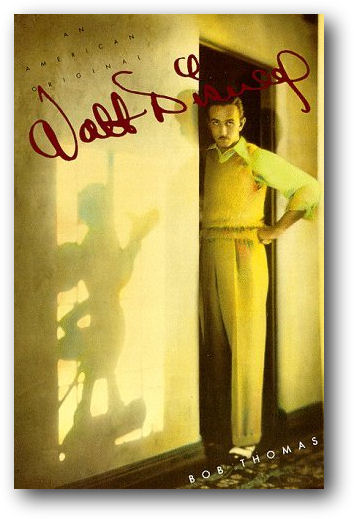
Last year I read Walt Disney – An America Original by Bob Thomas. From stories in Thomas’ book I’ve noted here 10 examples of Disney’s entrepreneurial determination, optimism, and creativeness.
- In 1922, at the age of 20, Walt was living in Kansas when he quit his $60 a week job (this was three times the average wage in America) to launch his own animation business called Laugh-O-gram Films. He raised money from investors and took a huge pay cut. By 1923 the company had failed and he had no money. Deciding to head to California he worked to raise cash for the train ride. With $40 and one suitcase he bought a first-class ticket and headed west. Who would buy a first class ticket in this situation? An optimist.
- By 1928 Disney successfully produced his first animated cartoon Oswald the Lucky Rabbit. What he didn’t know was his New York distribution company unethically hired away his animators so as to force Disney to reduce the value of his contract. It would not be the only time his “partners” would hire away Disney workers to try and gain leverage. As usually happened, Disney remained positive and sent a positive message to his brother, Roy, “Keep your chin up…we will be able to laugh last – that’s the best laugh of all.”
- On the trip back to California, Disney put the finishing mental touches on what would become Mickey Mouse. He then inspired his remaining team, dealt with serious financial challenges, and created Plane Crazy, the first Mickey cartoon based on Lindbergh’s flight across the Atlantic. He then went against all the leaders in the movie industry and became the first animator to add voices to another Mickey film called Steamboat Willie.
- In 1932, after his chief animator had been hired away by his distribution “partner”, Disney again decided to go in a new direction – add color to the cartoons at a much higher cost. Disney was the only one who saw the potential. His brother thought the cost would get no return. Walt knew that color would mean their short animations would have longer runs in theaters and they would earn more money downstream. He was right.
- In 1934 short animations were becoming unprofitable so Disney wanted to make a full feature film. The cost was at least $500,000, a huge sum for their small studio. All his advisors told him he was crazy. He held a meeting and personally acted out and told the story of Snow White and the Seven Dwarfs. The team understood his vision and they made the film, which grossed $8,000,000 worldwide ($100,000,000 today.)
- In 1940 the company’s financial condition was in peril. Roy Disney had a meeting with Walt in which he started to outline the seriousness of the problem – Walt started laughing. He couldn’t believe how much they had grown from the days when they had trouble raising a few dollars and now they owed banks 4.5 million dollars. The mood shifted and the Disneys decided to go public and raise extra funds.
- World War II seriously impacted the Disney Company. Throughout this difficult period Disney stayed positive and helped the government by making many military films and even used Donald Duck to convince Americans to pay their income taxes.

- 8. By 1952 Walt Disney knew that a high-caliber amusement park could be created using many of the Disney characters that had been created over the past 25 years. Again his family, advisors, and Board of Directors didn’t agree – the Board argued it was a different business. Disney countered with, “Disney is in the entertainment business and that is what amusement parks are.” So he created a separate business and funded it initially by borrowing on a life insurance policy.
- 9. At the same time, Walt thought television would also provide a great extension for Disney. He then wondered if he could get television to effectively fund the development of Disneyland. Yes they would. ABC agreed to invest in Disneyland if Disney would produce a weekly show, which started as Disneyland and then became Walt Disney Presents. Around 1960 Disney switched to NBC because it would allow Disney to broadcast in color. Many years later, after Walt Disney’s death, Disney would buy ABC, which it still owns.
- 10. Walt Disney knew that Disneyland was really only serving people west of the Mississippi. So he thought they needed to build another amusement park, on a much larger scale, in the east. One of his last significant entrepreneurial acts happened during a secret flight east in November of 1963. During that flight he, and a few other executives, flew around mid-Florida, often at low altitudes, in search of land. One night they stopped in New Orleans and learned that President Kennedy had been shot. By the time they got back to California, everyone knew the vision for Disney World.
As we all know, it has been 50 years since that entrepreneurial flight on November 22, 1963. Disney was a man whose optimism and “can do” attitude defines the word “entrepreneur” and inspires us still today.
